Growing basil on a windowsill is something most home gardeners have tried. Growing spices at home to naturally flavor your cooking is another matter.
Ginger, saffron, turmeric: these plants require an investment of time and space that quick-growing guides don’t always spell out. Before filling your pots with rhizomes and corms, it’s worth knowing what each spice needs to produce a quantity you can actually use in the kitchen.
Real kitchen yields: what your pots can produce
Have you ever noticed that a packet of saffron weighs barely a few grams? That’s no coincidence. Only the red stigmas from each crocus flower are used, and harvesting them requires careful hand-picking. Growing saffron at home takes a lot of flowers to produce a small amount of spice. A small patch of corms yields a pinch, not a jar.
Ginger presents a different challenge. The plant needs a long stretch of continuous warmth to form a plump rhizome. In France, the growing season is short. Keeping a pot warm for several months will yield a piece of fresh rhizome—enough to flavor a few dishes, but nowhere near a year’s supply.
Turmeric follows the same pattern. Grown indoors in a tray of well-draining potting mix, it produces smaller rhizomes than those sold in stores. Its appeal lies elsewhere: freshness. Fresh turmeric, grated just before use, releases a peppery, aromatic flavor that dried powder can’t replicate.
Knowing what to expect helps you avoid disappointment and choose what to grow with your eyes open. Resources such as lejardindepices.fr can help you set realistic expectations based on the space and climate available.
Growing ginger in a pot: managing heat, water, and indoor pests
Ginger is often described as easy to grow at home. The reality is more nuanced, especially indoors.
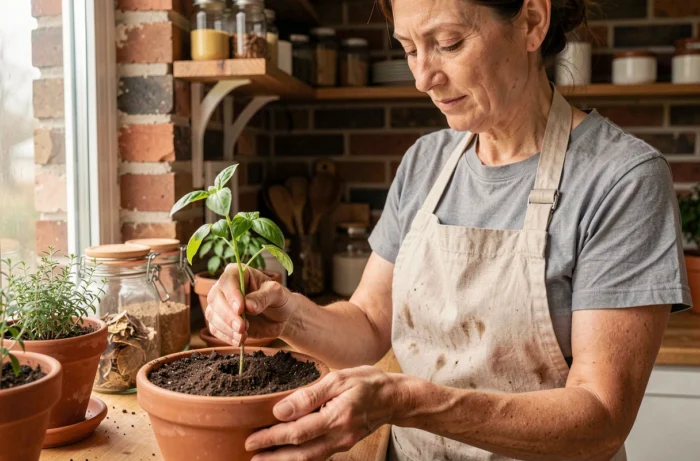
Overwatering is the biggest risk when growing ginger in a pot. The rhizome will rot if the growing medium stays waterlogged. Use a well-draining mix (potting soil amended with perlite or coarse sand) and a pot with drainage holes, without leaving it in a saucer of standing water. Water when the top two centimeters of soil are dry, not before.
Dry air in a heated apartment creates another problem. It encourages spider mites, tiny pests that weaken the plant by sucking sap from its leaves. To reduce the risk, mist the foliage regularly or place the pot on a tray of damp clay pebbles.
The growing cycle to follow
Start the rhizome in a warm, bright spot in late winter if possible, away from harsh direct sunlight. Once nighttime temperatures stay above around 15°C, you can move the pot to a balcony or patio. Bring it back inside as the nights cool in autumn. Ginger cannot tolerate frost, even for a short time.
This indoor-outdoor cycle lasts several months. Patience is the real cost of growing ginger: you don’t need expensive equipment, but you do have to wait until late summer, or even autumn, to harvest.
Growing saffron outdoors: a seasonal cycle, not an indoor plant
Saffron isn’t an indoor plant to keep on a windowsill all year. This is a common misconception, and it often leads to failure. Saffron crocus follows a specific cycle that requires summer dormancy.
Plant the corms in summer in well-drained, sunny soil. They flower in autumn. The foliage then grows through winter and spring before the plant goes dormant. This cycle also works in pots, as long as you almost completely stop watering during dormancy—a counterintuitive step if you’re used to keeping your plants hydrated.
Soil and sunlight for saffron
Heavy clay soil can cause the corms to rot. Choose light, sandy soil and a sunny spot. For pots, an equal-parts mix of potting soil and sand works well. The container should be deep enough to bury the corms about 10 centimeters down.
Saffron can withstand winter cold, unlike ginger. That’s an advantage for gardens in France: there’s no need to bring the pots indoors. However, yields remain modest in a small space.
Choose spices to suit your space and available time
Before sowing or planting, ask yourself a simple question: how much space and time do you really have? Not all spices require the same level of commitment.
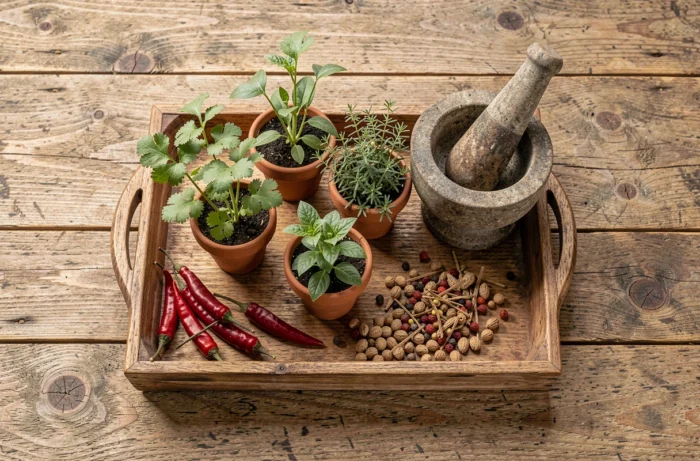
- Small space, little time: A chili pepper plant in a pot on a sunny balcony will produce fruit within a few months, with regular watering and little maintenance. One plant is enough to flavor dishes throughout the season.
- Medium-sized space, moderate patience: Turmeric in an indoor tray or ginger in a pot needs several months to grow, a warm, bright spot, and careful watering. Yields are modest, but the freshness makes up for it.
- A garden and a taste for a challenge: Saffron grown outdoors needs well-drained soil, a seasonal cycle to follow, and meticulous hand-harvesting. The yield is small, but for enthusiasts, the satisfaction of growing this rare spice makes the effort worthwhile.
Other spices, such as caraway, fennel, and coriander grown for their seeds, are easy to grow in a garden or pot. They’re less spectacular but more productive: a coriander plant allowed to go to seed produces enough seeds to flavor dishes for weeks.
Growing spices at home won’t replace buying them from a specialty store. The appeal lies elsewhere: tasting freshly grated ginger, savoring saffron harvested from your own garden, and learning about the life cycle of a plant you’ve only ever known as a powder. The real reward is culinary and educational, not financial. Choose one or two spices suited to your space, accept the limits of what they can produce, and enjoy the results on your plate.