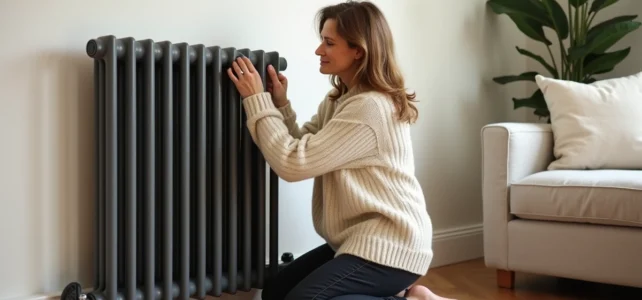
An electric cast iron radiator is not just a simple convector dressed in a heavy body. It is an inertia emitter whose thermal behavior directly depends on the mass of the heating body, the quality of the integrated resistance, and the associated electronic control. Understanding these three parameters dictates the choice of the right device, its sizing, and its long-term profitability.
Thermal inertia of cast iron: what mass changes in control
Cast iron has a high specific heat capacity. Specifically, a cast iron radiator stores heat longer than an aluminum or steel model and releases it gradually after the resistance is turned off. This inertia phenomenon reduces the on/off cycles of the thermostat, smoothing the ambient temperature and limiting sudden power demands.
The downside of this mass is the heating time. A cast iron radiator takes significantly longer to heat a cold room than a radiant panel or a convector. Therefore, we recommend systematically pairing a cast iron body with a programmable thermostat capable of anticipating occupancy periods. Without programming, inertia becomes a handicap: the room takes too long to reach the set temperature upon waking or returning from work.
The weight of the radiator, often several dozen kilograms, also imposes fixing constraints. On drywall partitions, reinforcements or a floor support are essential. On load-bearing masonry walls, suitable anchors for the load are sufficient, but prior verification remains necessary.
To delve deeper into consumption and budget issues, the Bâtir Architecte online guide details the expense items to consider, from equipment to installation.
Power sizing for an electric cast iron radiator
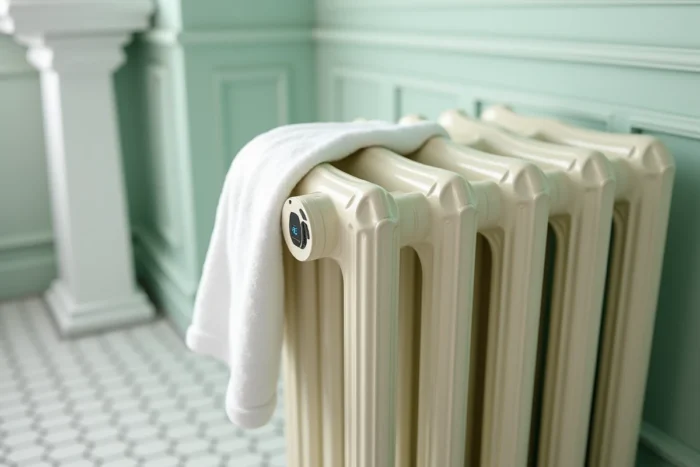
The power calculation is based on the watts per square meter ratio, adjusted according to the insulation of the home. For a building compliant with recent thermal regulations, we are around 50 W/m². For an old poorly insulated construction, the ratio can rise to 100 W/m². Between the two, it all depends on the level of energy renovation carried out.
Applying a single ratio to all rooms is a common mistake. A bathroom requires a higher power per square meter than a living room due to the higher set temperature and air renewal related to the VMC. Conversely, a south-facing bedroom with good glazing requires less installed power.
- Well-insulated living room or lounge: start with a ratio of 60 to 70 W/m², adjusted for orientation and the number of walls facing outside.
- Bedroom: lower ratio, around 50 W/m², as the nighttime set temperature is generally reduced.
- Bathroom: higher ratio to quickly reach the comfort set point, often supplemented by a towel dryer.
- Hallway or entrance: often overlooked, but a small emitter prevents the cold wall effect that destabilizes adjacent rooms.
Oversizing a cast iron radiator does not improve comfort. The device reaches the set point too quickly, turns off, and then the cast iron mass continues to release excess calories. The room overheats, the thermostat restarts late, and the cycle creates an unpleasant temperature oscillation.
Purchase price and installation cost of an electric cast iron radiator
The price of an electric cast iron radiator varies greatly depending on power, design, and brand. Entry-level models are in an accessible price range, while high-end devices with built-in programming, open window detection, and Wi-Fi connectivity are significantly more expensive.
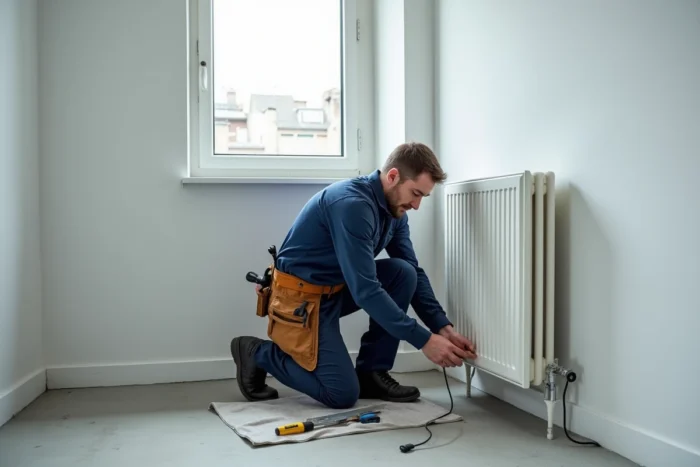
The installation cost represents a significant portion of the overall budget. An electrician or heating technician charges for installation considering the installation of a dedicated electrical line (mandatory if the existing circuit is undersized), reinforced wall mounting, and connection to the pilot wire. We observe that many quotes omit the cost of wall reinforcement, which leads to surprises in the final billing.
One often overlooked point: each radiator over 2,000 W must have its own dedicated circuit to the electrical panel. For an old home where convectors are replaced by high-power cast iron radiators, bringing the panel up to code can significantly increase the bill.
Electricity consumption and evolution of the kWh price
An electric cast iron radiator consumes exactly as much kWh as a convector of the same power running for the same time. The difference lies not in gross consumption but in regulation. The inertia of cast iron allows the thermostat to turn off earlier and maintain the temperature through passive release, thus reducing the effective operating time of the resistance.
The pricing context favors inertia electric systems. Since the peak in February 2024, the regulated electricity tariff has seen three successive decreases, reaching a level around 0.194 euro/kWh including tax in Base option for 6 kVA. This downward trajectory improves the economic balance of electric radiators compared to gas or oil.
Moreover, the Council of Mandatory Levies has reported that the decrease in fossil energy consumption reduces associated tax revenues and proposes a rebalancing by increasing taxes on fossil fuels while reducing those on electricity. This fiscal orientation strengthens the competitiveness of electric heating in the medium term.
Selection criteria for a durable electric cast iron radiator
The cast iron heating body is virtually indestructible. What ages is the regulation electronics and the resistance. We recommend checking three points before purchase:
- Is the resistance replaceable without changing the radiator body? On some models, the resistance is sealed in the cast iron, making any repair impossible.
- Is the built-in thermostat compatible with a 6-order pilot wire? This is the condition for integrating the radiator into a centralized management system or an external programmer.
- Does the manufacturer offer spare parts for a long duration? A cast iron radiator can last several decades, but only if the electronics can be replaced.
The choice between a connected model (Wi-Fi, smartphone app) and a locally programmed model depends on the number of radiators in the home. Beyond four or five devices, centralized management via an app genuinely simplifies settings and consumption tracking.
Cast iron remains the reference material for gentle and stable heat in living spaces. The additional cost at purchase is fully justified in a properly insulated home, where the inertia of the heating body and the downward trend in electricity prices work together in favor of comfort and budget control.