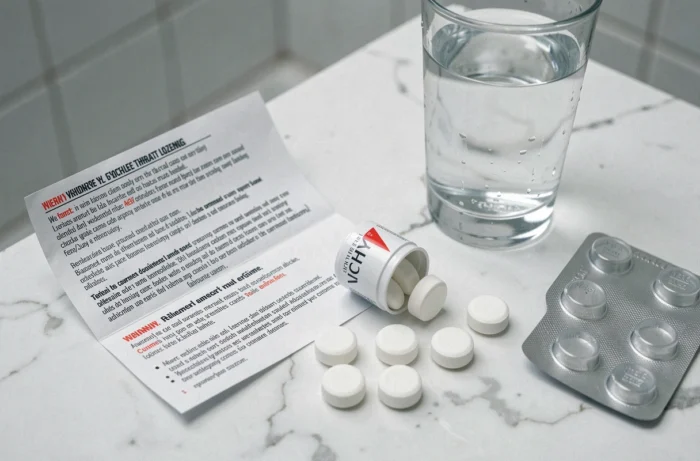
The Vichy pastilles are octagonal candies made from the mineral waters of the Vichy spa. Their composition is based on sodium bicarbonate and mineral salts, which gives them a reputation as a candy with digestive virtues. This reputation sometimes leads to excessive consumption, while some of their ingredients deserve special attention.
Sodium bicarbonate and mineral salts: what a Vichy pastille really contains
The main active ingredient in Vichy pastilles is sodium bicarbonate, an alkalizing agent that helps neutralize gastric acidity. They also contain mineral salts from the Vichy waters (calcium, magnesium, potassium) and, depending on the variety, sugar or polyol-type sweeteners for the sugar-free versions.
This composition is not trivial. Sodium bicarbonate, when used as a medicinal antacid, requires specific precautions, especially for people on a low-sodium diet. A pastille remains a candy, but its sodium content distinguishes it from an ordinary candy.
The sugar-free versions contain polyols, sweeteners whose digestive tolerance varies greatly from person to person. To fully understand the dangers and contraindications of Vichy pastilles, it is essential to examine each component separately rather than considering the product as a simple harmless candy.
Polyols and digestive issues: the trap of sugar-free Vichy pastilles
Sugar-free Vichy pastilles are often seen as a healthier alternative. In reality, the polyols they contain pose a specific problem. These sweeteners are carbohydrates that are partially absorbed by the small intestine: the unabsorbed fraction ferments in the colon.
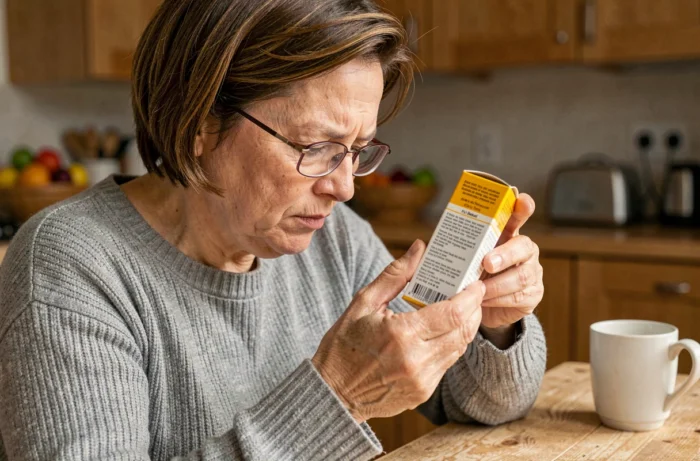
The most common symptoms are gas, bloating, and loose stools. The label of these products also includes a regulatory warning about the laxative effect in case of excessive consumption.
Sensitivity to FODMAPs and irritable bowel syndrome
People with irritable bowel syndrome are particularly at risk. Polyols are part of the FODMAPs, a group of fermentable carbohydrates identified as triggers for symptoms in these patients. Sometimes just a few pastilles are enough to cause significant discomfort.
Tolerance depends on the cumulative dose throughout the day. If you consume other sugar-free products (chewing gums, light drinks), the total intake of polyols may exceed your tolerance threshold without you realizing it.
Sodium intake: at-risk populations facing Vichy pastilles
Sodium is the most underestimated component of Vichy pastilles. In confectionery, it is often overlooked. However, sodium bicarbonate directly contributes to daily sodium intake.
Several profiles should be concerned:
- People suffering from high blood pressure, for whom any additional sodium intake can complicate blood pressure control
- Patients on a low-sodium diet prescribed by a doctor, especially in cases of heart or kidney failure
- People taking medications whose effectiveness is altered by excess sodium or bicarbonate (certain diuretics)
For these populations, consuming Vichy pastilles without medical advice poses a real risk. The fact that it is a candy and not a medication blurs the perception of danger: one does not think to mention this habit during a consultation.
Sugar, dental erosion, and repeated daily consumption
The classic versions of Vichy pastilles contain sugar. Their small and easy-to-consume format throughout the day encourages prolonged snacking. However, the frequency of sugar exposure is more significant than the total amount for the risk of cavities.
Regularly sucking on pastilles maintains an acidic environment in the mouth for extended periods. This mechanism promotes dental enamel erosion, an irreversible phenomenon that brushing alone cannot compensate for.
Do sugar-free versions protect teeth?
The sugar-free versions eliminate the cavity risk associated with sucrose. The benefit is real, but caution remains necessary if consumption is frequent.

Recommended dosage and practical precautions for Vichy pastilles
No regulation sets a maximum number of Vichy pastilles per day, as they are a candy and not a medical device. Therefore, caution relies on a few simple principles.
- Always read the ingredient list of the specific box, as the composition varies from one variety to another (with sugar, sugar-free, mint, lemon)
- Take into account the warning about the laxative effect on the sugar-free versions and limit consumption accordingly
- Report this habit to your doctor or pharmacist in case of a low-sodium diet, medication treatment, or chronic digestive disorders
- Do not consider Vichy pastilles as a substitute for a medicinal antacid: the precautions for use are not the same
Vichy pastilles remain a beloved candy, whose composition based on mineral salts and sodium bicarbonate distinguishes them from classic candies. This particularity, which makes them appealing, is also what necessitates not trivializing their consumption. The most useful reflex is to check the label and adjust the quantity to one’s own health situation.